

Lead nurturing workflows are the backbone of successful sales and marketing strategies. At Lead Qualifier SaaS, we’ve seen firsthand how these automated processes can transform leads into loyal customers.
In this post, we’ll guide you through creating an effective lead nurturing workflow that drives results. Get ready to boost your conversion rates and streamline your sales funnel.
What Are Lead Nurturing Workflows?
Definition and Importance
Lead nurturing workflows are automated sequences of targeted communications that guide potential customers through the buyer’s journey. These workflows play a vital role for businesses aiming to convert leads into loyal customers efficiently.
The Power of Personalized Communication
Effective lead nurturing workflows use personalized content to engage prospects at every stage of their journey. Tech companies using personalized email campaigns report a 41% higher click-through rate and a 29% increase in open rates. This statistic underscores the importance of tailoring messages to each lead’s specific needs and interests.
Key Elements of Successful Workflows
A well-designed lead nurturing workflow includes several critical components:
- Trigger Events: Specific actions that start the workflow (e.g., downloading a whitepaper or visiting a pricing page).
- Segmentation: Dividing leads based on demographics, behavior, or interests ensures relevant communication.
- Multi-Channel Approach: Using a mix of email, SMS, and phone calls increases engagement chances.
- Timely Follow-ups: Automated, prompt responses to lead actions keep prospects engaged and moving through the funnel.
- Progressive Profiling: Gradually collecting more information about leads allows for increasingly personalized interactions.
Measurable Benefits for Sales and Marketing
Implementing effective lead nurturing workflows yields significant benefits. Forrester Research finds that companies who excel at lead nurturing generate 50% more sales-ready leads at 33% lower cost. This translates to a more efficient sales process and higher ROI for marketing efforts.
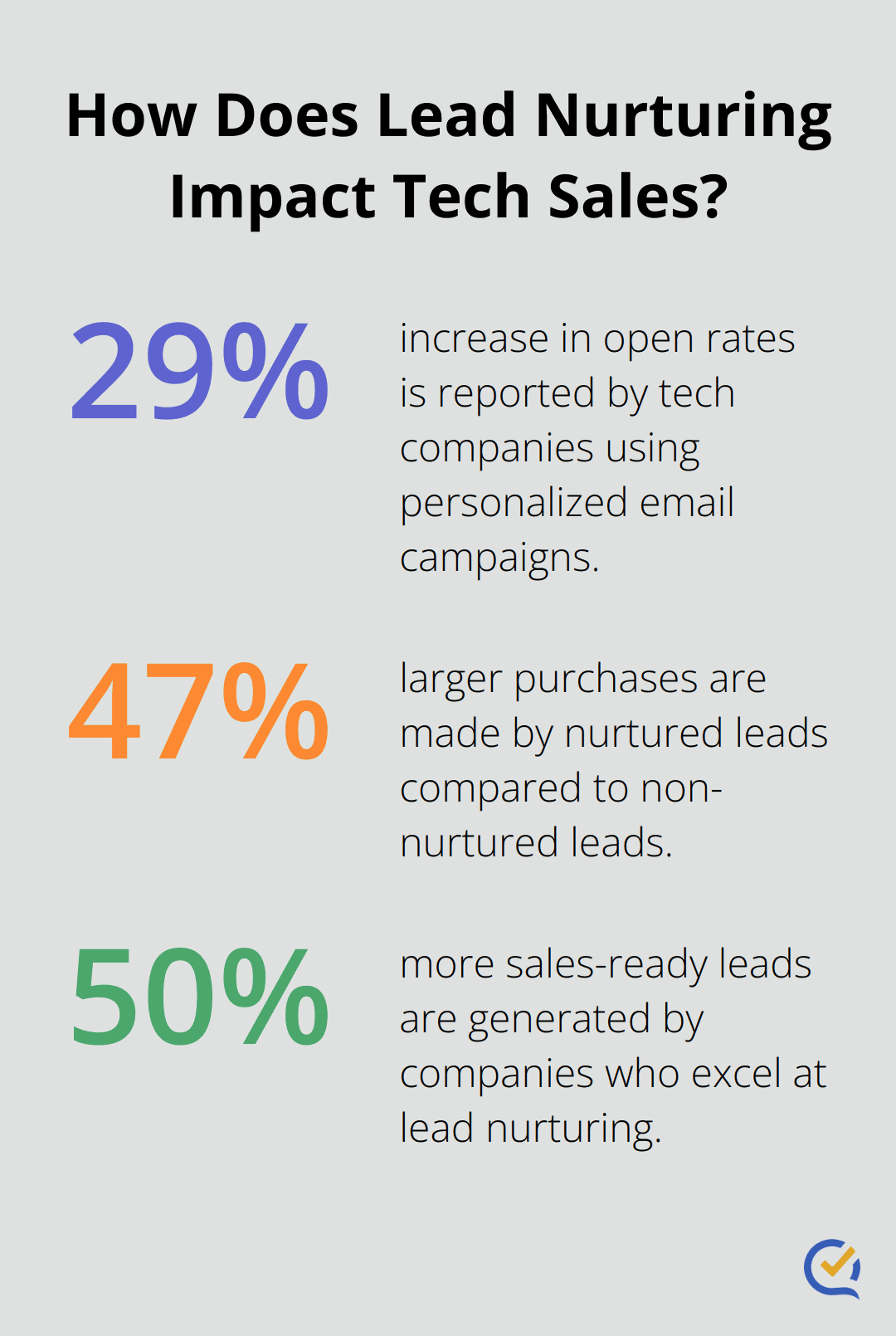
Moreover, the Annuitas Group found that nurtured leads make 47% larger purchases compared to non-nurtured leads. This finding highlights the value of building relationships with prospects over time.
For marketing teams, lead nurturing workflows provide valuable insights into prospect behavior and preferences. This data can inform future campaign strategies and help refine targeting efforts.
Sales teams benefit from a steady stream of qualified leads, allowing them to focus on closing deals rather than cold outreach. With proper lead qualification, sales reps can engage with genuinely interested prospects confidently.
As we move forward, let’s explore how to design an effective lead nurturing strategy that capitalizes on these benefits and drives your business growth.
How to Design Your Lead Nurturing Strategy
Know Your Audience Inside Out
The first step in designing your lead nurturing strategy requires a deep understanding of your target audience. This goes beyond basic demographics. You need to know their pain points, goals, and decision-making processes.
Start by analyzing your existing customer base. Look for patterns in their behavior, preferences, and purchasing habits. Use tools like Google Analytics to gather data on website visitors and their interactions with your content.
Next, conduct surveys and interviews with your current customers. Ask them about their challenges, what led them to choose your product, and how they use it. This firsthand information proves invaluable for creating accurate buyer personas.
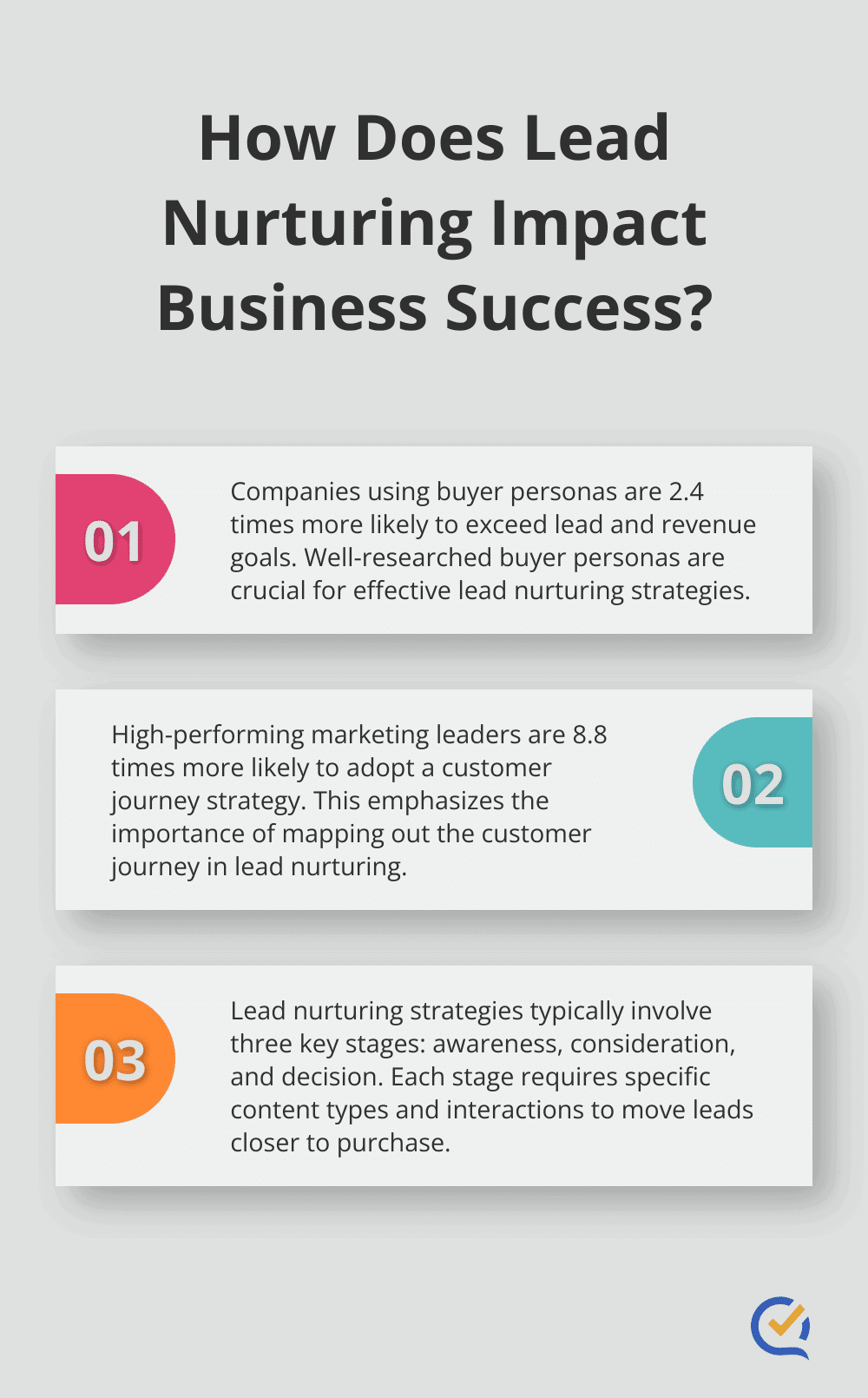
A study shows that companies exceeding lead and revenue goals are 2.4 times more likely to use buyer personas for demand generation than those that miss these goals. This underscores the importance of well-researched buyer personas in your lead nurturing strategy.
Chart the Customer Journey
Once you have a clear picture of your target audience, map out their journey from initial awareness to purchase decision. This will help you identify key touchpoints where your lead nurturing efforts can make the most impact.
Start by outlining the stages of your sales funnel. Typically, these include awareness, consideration, and decision. For each stage, list the types of content and interactions that will move leads closer to a purchase.
For example, in the awareness stage, blog posts and social media content can attract potential leads. In the consideration stage, case studies and product comparisons can help leads evaluate your offering. Finally, in the decision stage, personalized demos and free trials can push leads towards conversion.
Set Clear, Measurable Goals
Without clear goals, you can’t measure the success of your lead nurturing strategy. Set specific, measurable objectives for each stage of your workflow.
For instance, you might try to increase email open rates by 20% in the first month of implementing your new strategy. Or you could set a goal to reduce the average time from initial contact to purchase by 15%.
Use the SMART framework to ensure your goals are Specific, Measurable, Achievable, Relevant, and Time-bound. This approach will help you stay focused and track your progress effectively.
Choose the Right KPIs
Selecting the right Key Performance Indicators (KPIs) is essential for monitoring the effectiveness of your lead nurturing workflow. Some important KPIs to consider include:
- Conversion Rate: The percentage of leads that become customers.
- Time to Conversion: How long it takes for a lead to move through your funnel.
- Engagement Rate: How often leads interact with your content.
- Customer Lifetime Value: The total revenue you can expect from a customer over the course of your relationship.
A report indicates that high-performing marketing leaders are 8.8 times more likely to adopt a customer journey strategy as part of the overall business strategy. This highlights the importance of choosing the right metrics to measure your success.
With a solid strategy in place, it’s time to move on to the practical implementation of lead nurturing tactics. In the next section, we’ll explore how to create valuable content, utilize automation tools, and personalize your messaging to maximize the effectiveness of your lead nurturing workflow.
Implementing Effective Lead Nurturing Tactics
Create High-Value Content for Every Funnel Stage
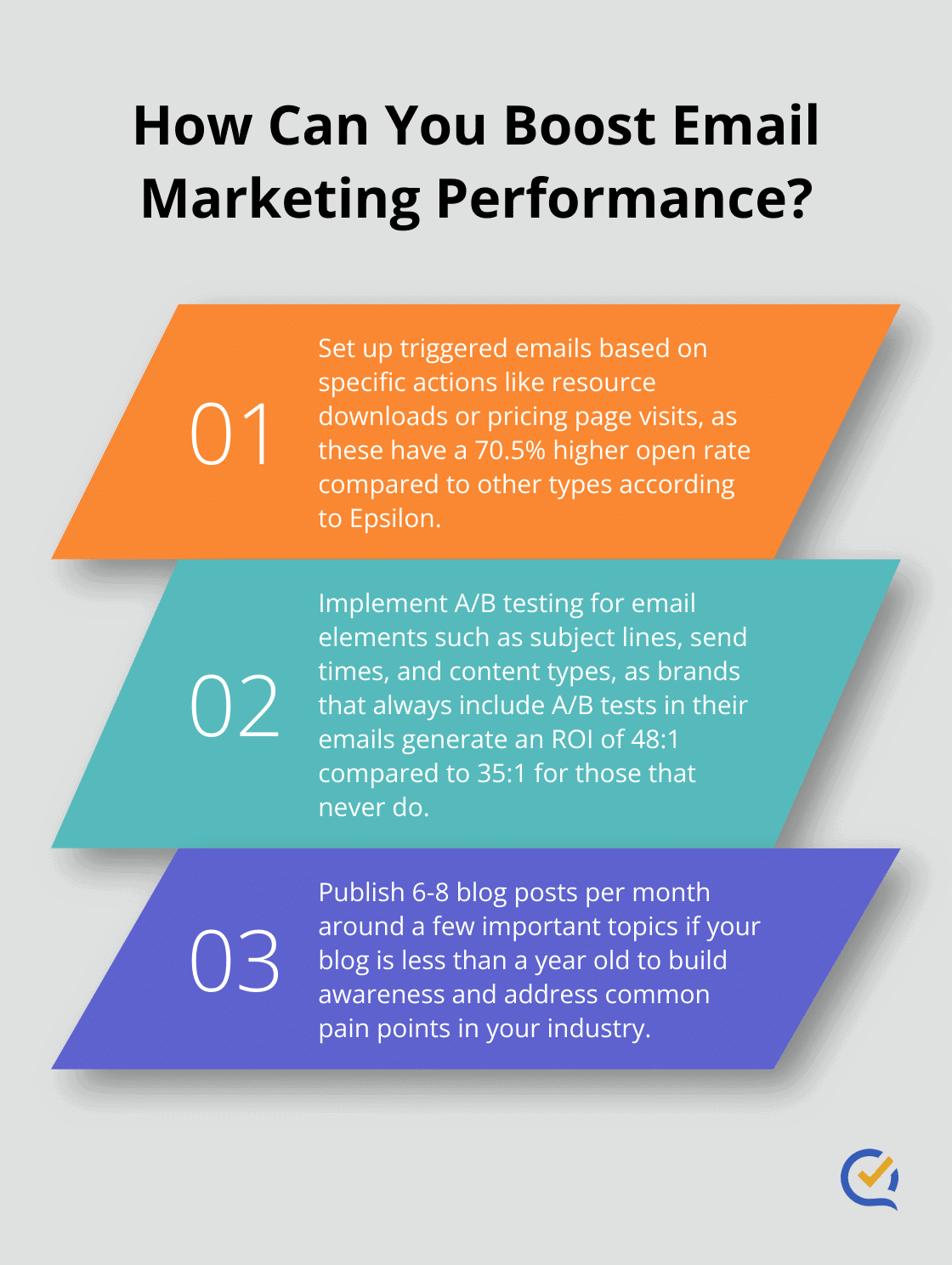
Your lead nurturing strategy starts with content that resonates at each stage of the buyer’s journey. Begin with an audit of your existing materials to identify gaps. For the awareness stage, produce educational blog posts, infographics, and social media content that address common pain points. If your blog isn’t at least a year old, you should aim to publish 6-8 posts a month around a few important and promising topics.
Move to more in-depth resources for the consideration stage. Offer whitepapers, case studies, and webinars. The “2022 Content Preferences Survey Report” explores how the content consumption and engagement practices of B2B buyers have evolved over the past year. For the decision stage, provide product comparisons, free trials, and personalized demos to push leads towards conversion.
Utilize Automation Tools for Timely Engagement
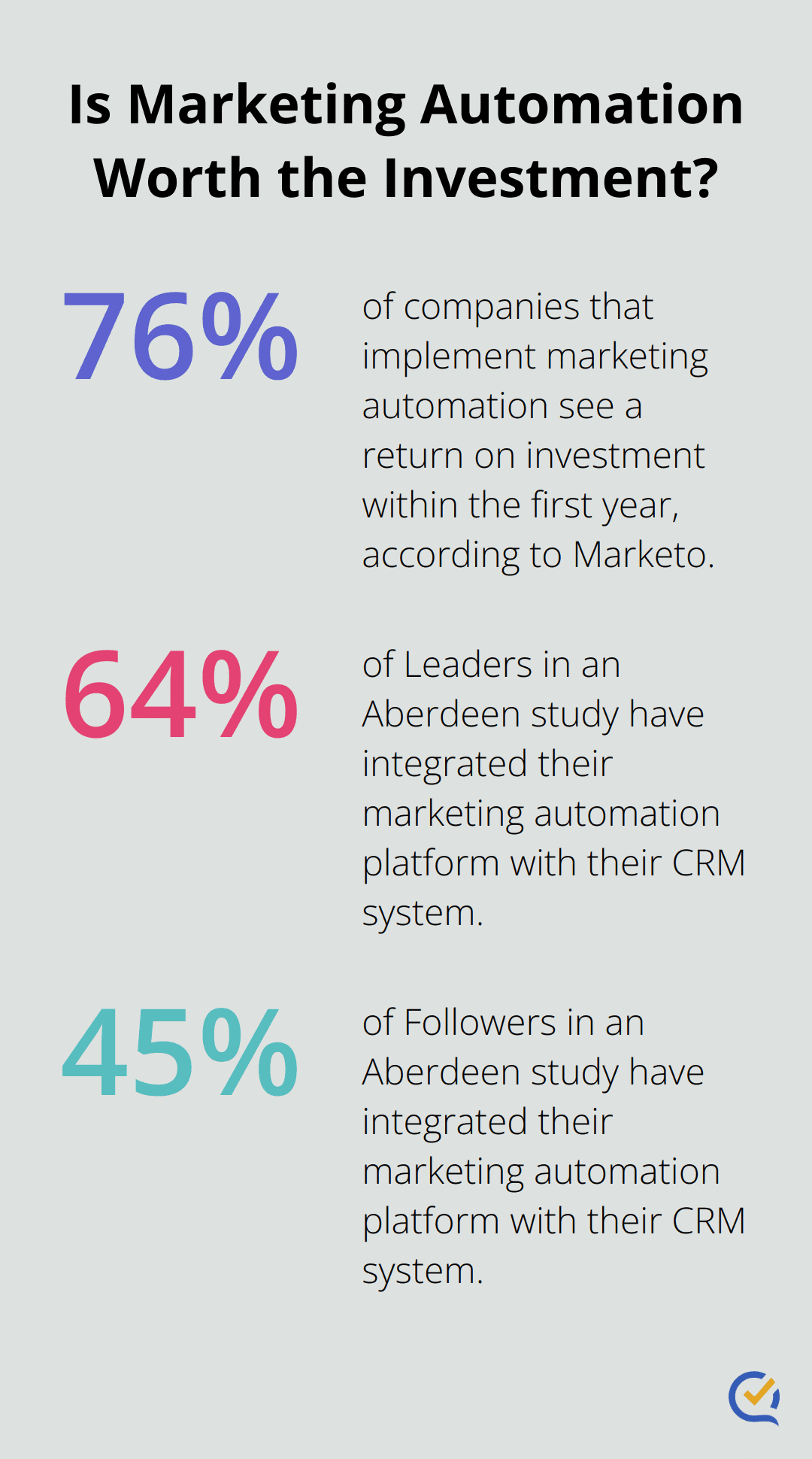
Automation tools form the backbone of an efficient lead nurturing workflow. Select a platform that integrates with your CRM and offers robust segmentation capabilities. Companies that implement marketing automation often see a return on investment within the first year (76% according to Marketo).
Set up triggered emails based on specific actions (e.g., resource downloads or pricing page visits). These emails boast a 70.5% higher open rate compared to other types (Epsilon). Use automation to score leads based on engagement, directing your sales team to the most promising prospects.
Personalize Your Communication Strategy
Tailor your messaging to individual lead behavior and preferences to boost engagement significantly. Segment your leads based on industry, job role, or specific interests. An Aberdeen study noted that “64% of Leaders and 45% of Followers in [their] study have integrated their marketing automation platform with their CRM system.”
Implement dynamic content in your emails to display different information based on lead attributes. Show varied case studies or product features depending on the lead’s industry. Use progressive profiling to gather more information about leads over time, enabling increasingly personalized communication.
Test and Optimize Your Campaigns
Continuous improvement is key to a successful lead nurturing workflow. Test different elements of your nurturing campaigns, such as subject lines, send times, and content types. A/B testing can lead to significant improvements in engagement rates. Brands that always include A/B tests in their emails generate an ROI of 48:1, compared to 35:1 for those that never include A/B tests (Litmus).
Integrate Multi-Channel Approaches
While email remains a powerful tool, don’t limit your nurturing efforts to a single channel. Incorporate social media, retargeting ads, and even direct mail into your workflow. This multi-channel approach ensures you reach leads where they’re most active. Try to create a cohesive experience across all touchpoints (phone, email, social media) to reinforce your message and build long-term client relationships.
Final Thoughts
An effective lead nurturing workflow requires a strategic approach to boost sales and marketing efforts. Understanding your audience, mapping the customer journey, and setting clear goals form the foundation for success. Creating valuable content, using automation tools, and personalizing communication help engage leads throughout the funnel.
Lead nurturing demands continuous improvement and adaptation. Testing and optimizing campaigns based on key metrics ensures your workflow remains effective as your business grows. A specialized tool like Lead Qualifier can enhance your process by verifying leads through various channels (live calls, SMS, and emails).
Lead Qualifier streamlines your entire lead management process, from initial contact to conversion. This powerful platform allows your sales team to focus on genuinely interested prospects, maximizing the impact of your lead nurturing efforts. Implement these strategies and leverage the right tools to create a lead nurturing workflow that converts prospects and builds lasting customer relationships.
